

What's actually under the surface matters more than the surface itself.
Concrete basins have become one of the most searched-for products in contemporary bathroom design — and the market has filled up accordingly. But "concrete basin" describes a huge range of quality, and the difference between a good one and a poor one only becomes obvious after it's installed, sealed into a vanity unit, and used every day for a year.
The two problems most concrete basins have
A large proportion of concrete basins on the market are mass produced overseas to a low cost point, and it shows in two specific ways:
1. They're left unsealed, or under-sealed. Concrete is naturally porous. Left untreated, it absorbs whatever sits on it — toothpaste, soap, hard water, make-up — and holds the stain permanently. A basin that looks perfect in a product photo can be visibly marked within weeks of daily use if it hasn't been properly and permanently sealed at the point of manufacture.
2. The colour is painted on, not built in. To hit a low price, many manufacturers cast in plain grey concrete and then coat or paint the visible surface to achieve colour. It looks convincing at first. But a painted finish sits on top of the material rather than running through it, so any chip, scratch or heavy wear reveals the grey concrete underneath — a problem with no real fix short of replacing the basin.
Both issues come down to the same thing: cutting corners in the material and the finishing process to hit a price, rather than engineering the basin to actually last in a bathroom.
How FORMED basins are different
FORMED basins are built to avoid both problems, by design rather than as an afterthought:
- Colour throughout — pigment is mixed into the material itself, so the colour is consistent through the full body of the basin, not just the visible face.
- Fibre reinforced — every basin is reinforced for strength and durability, built to withstand daily use rather than just display. This also makes FORMED's concrete stronger than traditional ceramic, which is brittle by comparison and prone to chipping or cracking on impact.
- Permanently sealed — FORMED basins are sealed as standard, so beyond ordinary cleaning, there's nothing else the customer needs to do to keep the surface performing.
- Cast from a recycled concrete blend, hand made to order in our own workshop in England — not mass produced to a price point overseas.
The result is a basin built to outperform, not just look the part: no staining from daily use, no painted finish to wear through, no ongoing sealing or maintenance routine required, and a strength standard ordinary concrete and ceramic basins alike don't match.

What to check before buying a concrete basin
If you're comparing concrete basins, it's worth asking the manufacturer directly:
- Is the basin sealed, and is that sealing permanent or something I'll need to redo?
- Is the colour mixed through the material, or applied as a surface coating?
- Is the concrete reinforced, and with what?
- Where and how is the basin made?
FAQ
Do concrete basins stain? An unsealed or poorly sealed concrete basin will stain with daily use, because concrete is naturally porous. A properly and permanently sealed basin, like every FORMED basin, resists staining without any ongoing treatment.
Do I need to reseal a FORMED concrete basin? No. FORMED basins are permanently sealed at the point of manufacture. Beyond general cleaning, there's nothing further required.
Why do some concrete basins fade or chip to reveal grey underneath? That happens when colour has been painted or coated onto a plain grey base rather than mixed into the material. FORMED basins are coloured throughout, so there's no coating to wear through.
Is a concrete basin stronger than a ceramic one? When it's properly reinforced, yes — and FORMED's is. Fibre-reinforced concrete resists chips and impact damage better than ceramic, which is a brittle material and can crack or chip from a single sharp knock. Every FORMED basin is fibre reinforced as standard, giving it a real strength advantage over both ceramic and unreinforced concrete alternatives.
Are all concrete basins made the same way? No. Quality varies significantly depending on the concrete blend, reinforcement, sealing process and where the basin is manufactured. These differences aren't always visible until the basin has been in use for months.
For the full story on FORMED's recycled concrete blend, read Recycled concrete: why FORMED does it differently.
Read more

A material we spent years perfecting. Most concrete basins on the market are cast from standard, virgin-aggregate concrete — the same mix you'd use to lay a driveway, dyed and polished to look lik...
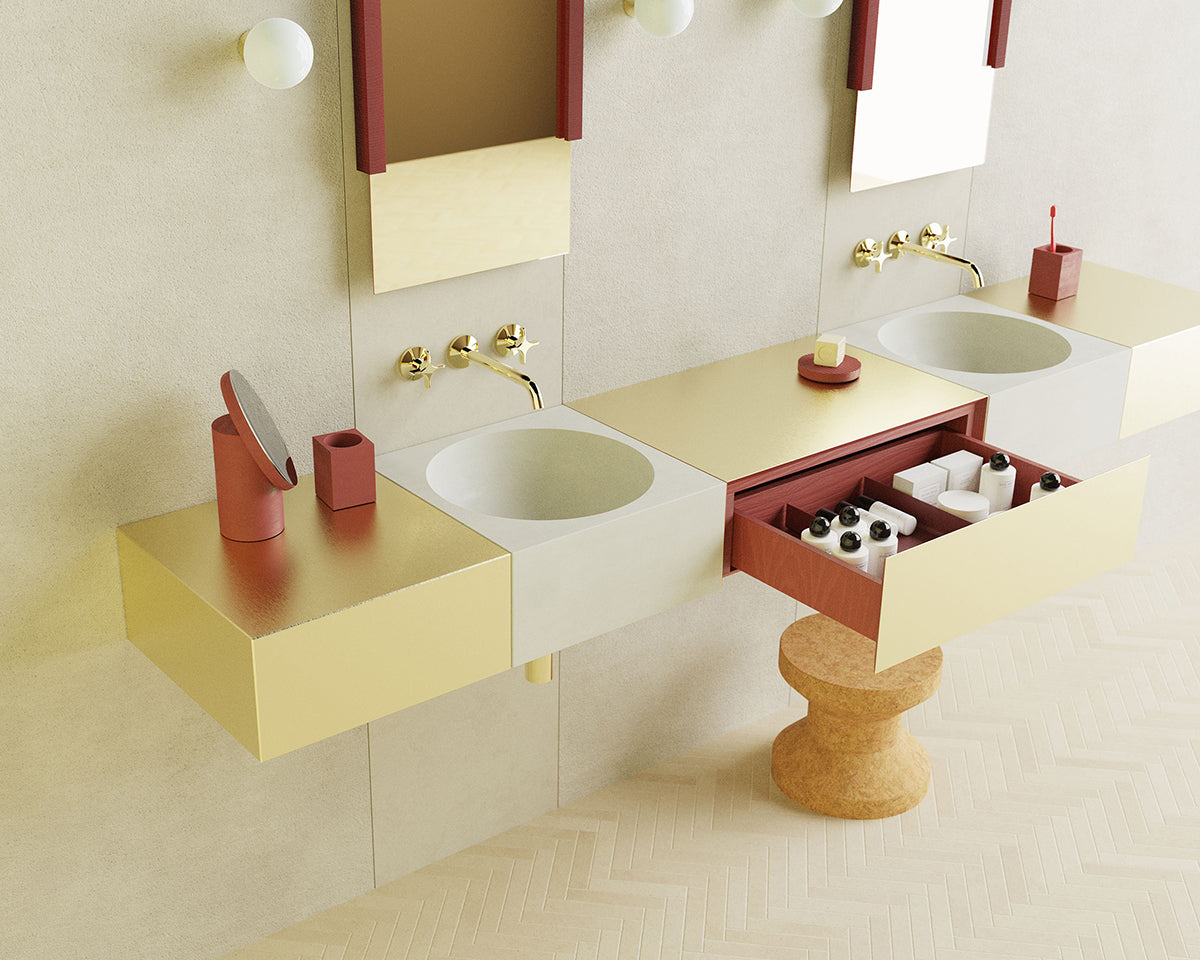
Storage designed around the basin. FORMED's new cabinet range was designed for one specific purpose: to support the basin collection, properly. Rather than sourcing generic vanity units to sit ben...