

Designing toward invisibility
Most people imagine creativity as a flash of inspiration — an image that arrives whole and only needs to be executed. In truth, the majority of my design process looks nothing like that. It's work: problem-solving, sketching, composition and balance, reflection, testing, more reflection, and finally reduction — removing extraneous elements until function is what's left leading the design.
But every so often, a moment of pure inspiration does arrive, and it's worth paying attention to when it does.
Holding Ideas Before They're Ready
Most of what I work with starts as something unresolved, kept in the head rather than committed to paper. It surfaces gradually and never through a single method — a keyword jotted down, a photograph that's caught something I can't yet name, a quick sketch just enough to hold a thought in place. For the ideas that persist, it eventually becomes a model — something you can turn in your hands, something that starts to argue back.
This process rarely arrives where it started. An idea can end up somewhere else entirely by the time it's been sketched, modelled, and reduced. And plenty of ideas don't resolve yet at all — they go back on the shelf, awaiting some later spark that makes them make sense, or quietly become the seed of something else unrecognisable from where they began. The keywords, photos, sketches, and models are an archive of thinking, and that archive is where a lot of future work comes from.
When Inspiration Does Strike
The Arc collection began with an afternoon stroll through an Italian arcade — the geometry and light play of those arches became a collection of concrete basins built from curving arcs, each one telling its own story through pattern, tactility, shadow and light.

The Facet collection came from an entirely different place: the low-polygon aesthetics of old computer games. That faceted way of rendering light and shadow on a digital object became the starting point for a collection of basins crafted from recycled materials, reimagining how light and shadow play across a form.

These moments are rare, which is part of what makes them precious. Not every one survives the process, either — I've had a moment of real clarity, a clear image and a clear feeling, that I simply couldn't realise through design. It stayed a feeling; it never became a form. That was disappointing, and it's a reminder that inspiration is the spark, not the method — the work still has to test it and find out whether it can hold up as an object.
Reduction as a Form of Honesty
Whether a piece starts from a rare spark or months of steady problem-solving, it goes through the same discipline: reduction. Not minimalism as a style, but a commitment to honesty — a refusal to let anything into the final form that hasn't earned its place. It forces the question of what a piece is actually about, stripped of decoration.
Reduction requires first having something to subtract from, which is why the early, expansive stages matter — sketching widely, modelling several directions, letting ideas overgrow before cutting them back. The discipline isn't restraint from the start; it's the willingness to remove what you've made once you understand what it's really saying, and to let function lead the way.
Colour and material follow the same logic. Colour behaves like a material property in its own right — weight, temperature, mood — rather than decoration. And showing the material honestly, letting concrete carry its own texture, letting a recycled surface read as what it is, is part of the same commitment. The goal is to let a material speak plainly, and to design a form quiet enough to let it.
Borrowing Across Disciplines
I follow different disciplines for inspiration less for their techniques than for their storytelling — the way art, fashion, and architecture each construct a narrative through form, and what that narrative reveals when it's stripped back to its essentials. Moving between fields keeps me from settling into any one discipline's assumptions.
Unobtrusive by Design
Design, at its best, is a bit of a conundrum — a constant cycle of decisions, each one stripping something back. Dieter Rams spent a career arguing that the best objects are quiet ones.
An object shouldn't announce the hours spent arriving at its curve or its surface. If the design has done its job, none of that struggle is visible — just the object, resolved, doing what it needs to do and nothing more.
Mark Jankowski
Founder
Read more
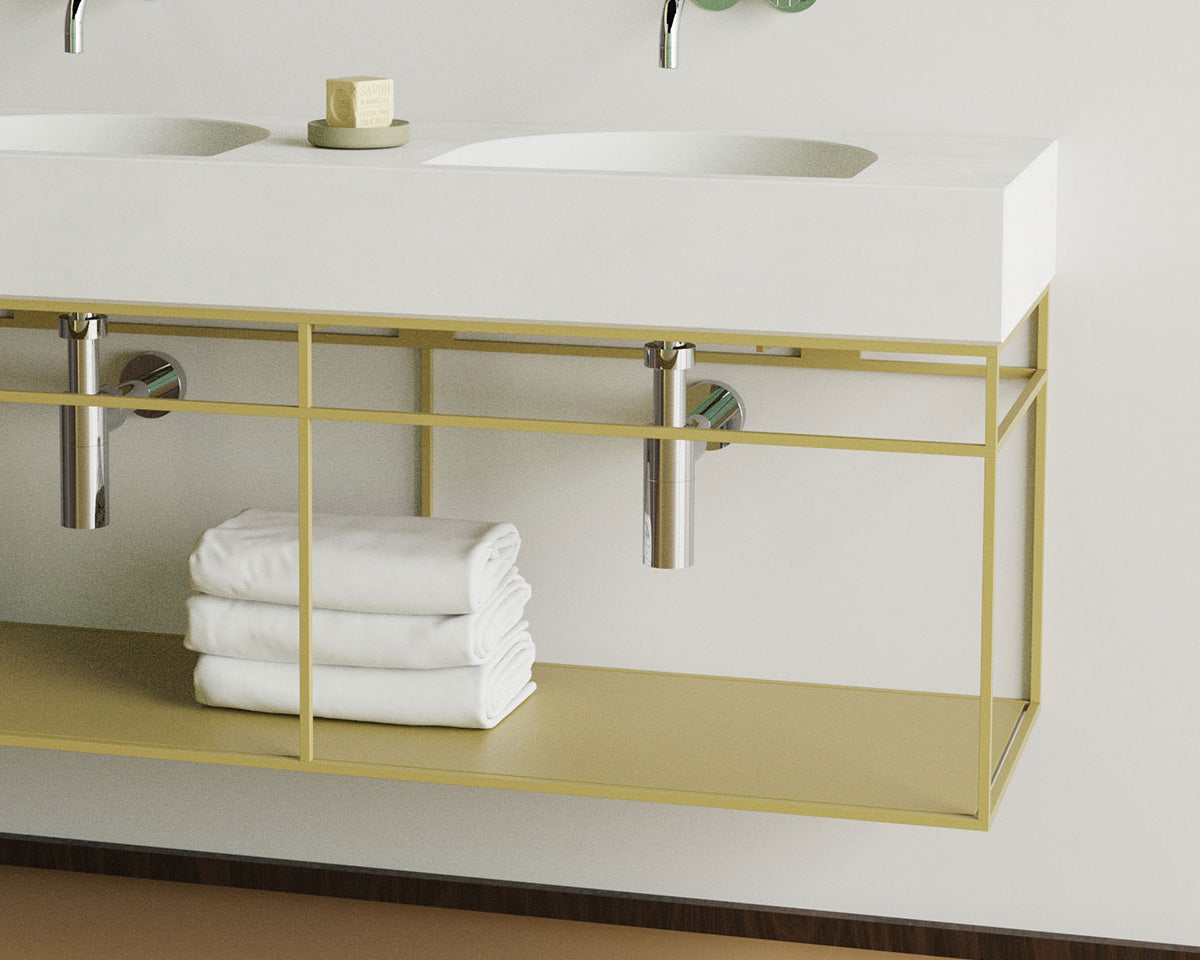
A minimal frame, built for the basin. Wireframe is FORMED's new frame collection for the basin range — a minimal, open metal structure designed as an alternative to a solid cabinet where a lighte...
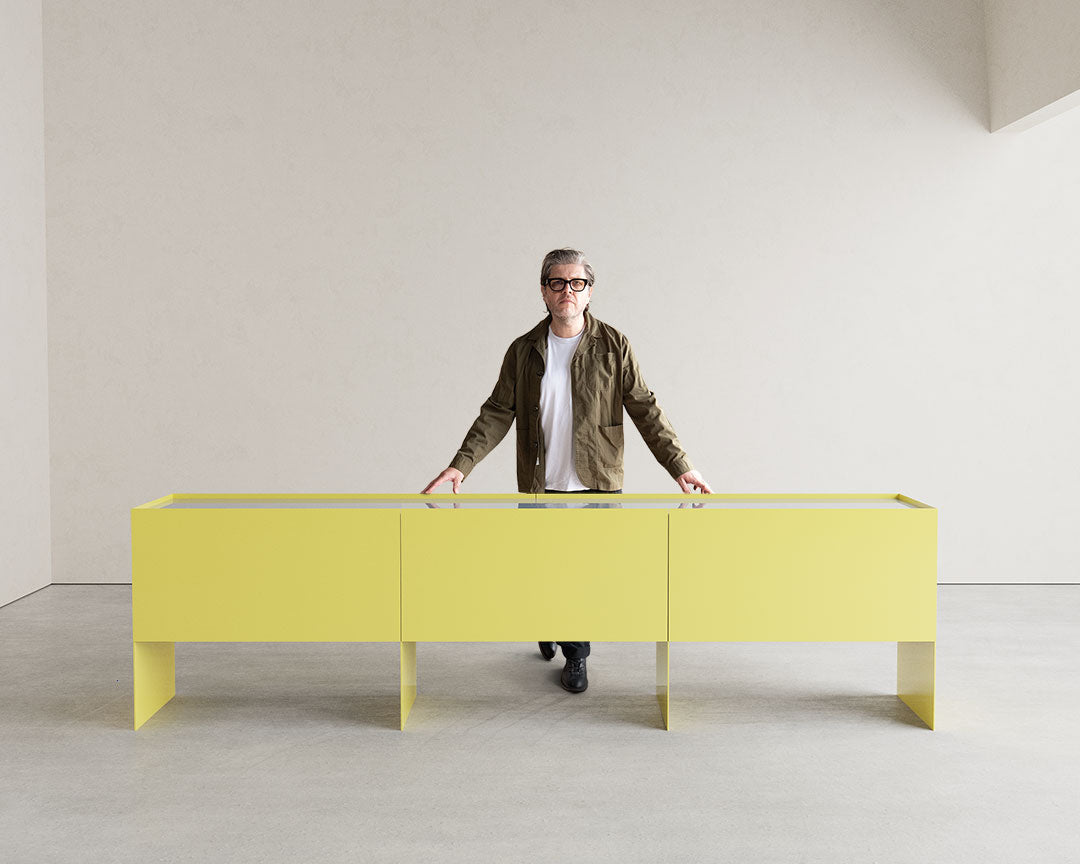
Designer | Maker I've always thought of myself as both of those words at once, not one or the other. A lot of design happens at a desk, or in a sketchbook, or in a moment of clarity that has nothi...